Colorful Crayons: A Designer's Honest Review
As an embroidery designer who spends hours testing new files for both personal studios and client orders, I know that the difference between a great finished product and a frustrating mess often comes down to the design file itself. Recently, I came across the Colorful Crayons design on Creative Fabrica. My initial thought was simple: this could be perfect for my upcoming back-to-school collection or a line of handmade nursery items. But before I commit it to a customer order, I need to look past the pretty preview image and evaluate how it actually performs in real-world stitching.
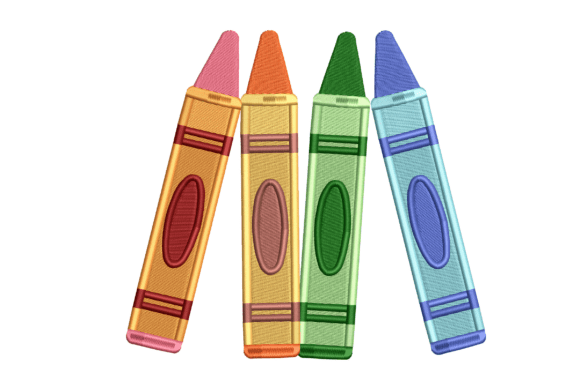
The concept is straightforward and charming. The design features four colorful crayons arranged in a playful alignment. It captures a nostalgic, artistic vibe that feels immediately inviting. For anyone looking to create embroidery files that appeal to children, teachers, or creative parents, the visual mood of Colorful Crrayons hits the mark. However, as a professional, I am less interested in what it looks like on a screen and more interested in how it translates to fabric.
First Impressions and Design Personality
When you first open the file, the layout of Colorful Crayons suggests a design meant for quick assembly and high impact. The crayons are depicted with a sense of movement, which usually implies a mix of stitch types. In my experience, designs that rely on satin stitch for outlines and fill stitch for the bodies can sometimes struggle if the density is too high, especially on smaller projects. The playful nature of the subject matter demands clean lines and vibrant color transitions.
I immediately imagined this design on various surfaces. The bright, primary colors pop against white backgrounds, making it ideal for kitchen towels, aprons, or tote bag designs. The aesthetic fits perfectly into the "School" category, evoking memories of art class and creativity. Yet, its appeal extends far beyond just classroom decor. It has a universal charm that works beautifully for baby blankets, pillow covers, and even custom apparel for craft fairs.
Real-World Performance on Different Projects
To truly understand the value of this machine embroidery design, I simulated several scenarios where I would use it for commercial purposes. Let's start with the most common request: embroidered patches and caps. If I were to produce a set of embroidered patches featuring Colorful Crayons, the shape of the crayons would require careful trimming. The curves of the crayon tips need to be sharp, and any jagged edges from the digitizing would be magnified when cut out.
For custom apparel like sweatshirts or t-shirts, the placement is key. A single row of four crayons works well across the chest or on the back pocket of a hoodie. However, if you plan to scale this up for a large back print, you must consider the stitch density. High-density fill stitches can make the fabric stiff, which is not ideal for soft baby clothes. I recommend checking the specific density settings in the software before running a full production batch.
The design also shines when used on home goods. Imagine a set of matching kitchen towels for a hostess gift or a boutique merchandise line. The cheerful palette adds a touch of whimsy to functional items. Similarly, for nursery decor, this design could be adapted for a wall hanging or a crib sheet border. The simplicity of the motif allows it to remain legible even when stitched at smaller sizes, provided the hoop size is appropriate.
Navigating Practical Challenges
While the concept is delightful, there are practical hurdles every embroiderer faces. One of the biggest concerns with digital embroidery files is the issue of small details. If the crayon tips or the paper labels contain tiny text or fine lines, they may disappear during the stitching process. This is particularly true if you are working with a small hoop size or using a machine with limited resolution. Before ordering materials, I always advise testing on scrap fabric to ensure the smallest elements hold their shape.
Fabric choice plays a massive role in the final outcome. Stretchy fabrics like jersey or fleece require a stabilizer that can support the weight of the thread without puckering. For dark fabric, you will need to decide if you want a background patch or if the thread colors are light enough to stand out without underlay. Sometimes, a design that looks vibrant on a white digital mockup can get lost on navy blue cotton unless you adjust the thread colors or add a contrasting outline.
Another critical factor is the washing durability. For items like apparel or tote bags that will see heavy use, the stability of the stitches is paramount. If the Colorful Crayons design relies heavily on long, unsupported runs, it might snag or pull over time. Always inspect the finished product after a wash cycle to ensure the integrity of the design remains intact. This step builds trust with your customers and ensures your brand reputation stays solid.
Maximizing Value and Presentation
Using a high-quality design like Colorful Crayons directly impacts the perceived value of your handmade products. Customers buying from Etsy or craft fairs expect a level of professionalism that reflects in the stitching quality. A crisp, well-executed design elevates a simple tote bag into a premium item. It also enhances your ability to create compelling printable mockups for online listings. When your photos show a design that looks clean and vibrant, potential buyers are more likely to click and purchase.
Furthermore, this design supports the narrative of creativity and learning. Whether you are selling to schools, parents, or teachers, the thematic consistency helps build a cohesive brand. If you offer personalized gifts, adding a name alongside the crayons can create a unique keepsake. The versatility of the motif means it can be adapted for birthdays, teacher appreciation week, or end-of-year celebrations, keeping your inventory fresh and relevant.
Essential Steps Before You Stitch
Before you dive into production, there are a few non-negotiable steps to take. First, always review the file details on the Creative Fabrica product page. Check the recommended hoop size and confirm the file formats compatible with your embroidery machine. Do not assume compatibility; verify it yourself.
Second, test your thread colors. The digital preview shows specific shades, but your physical spools might vary slightly. Ensure the contrast between the crayon colors and the fabric is sufficient. Third, select the right stabilizer. For woven fabrics, a tear-away might suffice, but for knits or delicate items, a cut-away stabilizer provides the necessary support to prevent distortion.
Finally, double-check the licensing terms. If you intend to sell commercial embroidery products, ensure the license allows for this usage. Some designs are for personal use only, while others permit commercial sales. Understanding these terms protects your business and respects the designer's work.
In conclusion, Colorful Crayons is a promising asset for any crafter or entrepreneur looking to add a splash of fun to their portfolio. Its playful alignment and vibrant colors make it a strong candidate for a wide range of projects, from back-to-school gear to personalized gifts. By taking the time to test, stabilize, and present the design correctly, you can turn a simple digital file into a beloved physical product. Whether you are decorating a sweatshirt or creating a boutique collection, this design offers a solid foundation for creativity.