It’s a Good Day to Teach, Teacher
As an embroidery designer who spends half my life in front of the hoop and the other half prepping for weekend craft fairs, I have learned that the difference between a design that sits on a table all day and one that sells out by noon often comes down to immediate visual impact. When I first reviewed the It’s a Good Day to Teach, Teacher embroidery design, I was looking for something that could anchor a booth display while remaining versatile enough for various product types. This retro floral teacher stitch offers exactly that kind of balance, blending nostalgic charm with professional execution suitable for any handmade product line.
First Impressions: The Retro Floral Appeal
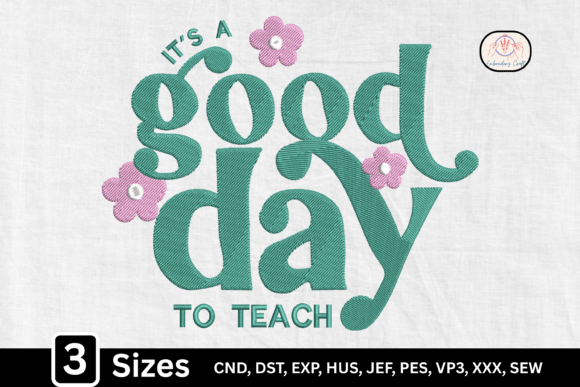
The title alone suggests warmth and positivity, but the visual execution is what truly matters in a physical market setting. The "Retro-style" descriptor implies a specific aesthetic—one that leans into vintage typography and soft, perhaps muted or pastel, color palettes rather than stark, modern minimalism. For a crafter fair seller, this is a strategic advantage. It feels personal, boutique, and premium. It does not look like mass-produced merchandise; it looks like a labor of love.
When you pull up the file as a digital embroidery file, the first thing to assess is the layout. A design featuring both text and floral elements needs careful spacing. If the flowers crowd the letters, the message gets lost. If the text is too small, it becomes unreadable from a few feet away—a fatal flaw for booth signage or hanging displays. This design appears to strike a good balance, allowing the phrase “It’s a Good Day to Teach” to serve as the focal point while the retro florals provide decorative framing without overwhelming the eye.
Product Versatility: Where This Design Shines
In my experience, the most successful Etsy sellers and market vendors do not rely on a single product type. They create collections. This machine embroidery design is versatile enough to be adapted across several high-demand categories. Here is how it performs on key items:
- Tote Bag Design Potential: Canvas tote bags are the bread and butter of craft fairs. Placing this design on the front pocket or centered on the main body creates an instant connection with educators shopping for back-to-school gifts. The retro vibe pairs beautifully with natural canvas tones.
- Apron Embroidery: Teachers often use aprons for art projects or kitchen hobbies. A well-executed apron embroidery piece adds perceived value, turning a basic utility item into a keepsake. Ensure the placement avoids areas that will constantly rub against countertops.
- Tea Towel Embroidery: Kitchen linens are excellent impulse buys. The contrast of thread against cotton weave highlights the texture of the embroidered patch-like quality of the design. Just be mindful of fabric texture; highly textured towels can obscure fine details.
- Caps and Beanies: Curved surfaces present a challenge. You must ensure the hoop size and stabilizer choice allow the design to conform to the curve without puckering. This design works best when placed slightly off-center on caps to follow the natural contour.
- Patches and Pouches: For smaller items like fabric pouches or iron-on patches, the clarity of the lettering is paramount. If the design includes tiny script or very thin lines, test these at the actual finished size before committing to bulk production.
Production Practicality and Quality Control
Before listing this as a small shop product, practical testing is non-negotiable. The description mentions formats including DST, PES, EXP, JEF, VP3, HUS, and XXX, which covers the vast majority of home and commercial machines. However, format compatibility is only step one. Step two is evaluating the stitch density.
Retro designs often utilize satin stitches for lettering. If the density is too high, the fabric may pucker, especially on lightweight materials like tea towels or sheer fabrics used for pillow covers. Conversely, if the fill stitches are too sparse, the underlying fabric might show through, giving a cheap appearance. Always run a test on scrap fabric that matches the weight and texture of your final product. Check the thread colors against the fabric; high contrast is essential for readability, but too much contrast can sometimes look harsh depending on the desired aesthetic.
Another critical factor is the stabilizer. For stable fabrics like denim totes, cut-away stabilizer provides lasting support. For knits or delicate cottons, tear-away or water-soluble options might be necessary to prevent distortion. Using the wrong stabilizer can ruin even the best design assets.
Selling Strategy: From Booth to Online Listings
For the commercial embroidery entrepreneur, this design has strong seasonal appeal, particularly around September (Back to School) and May (End of Year/Teacher Appreciation). However, its timeless retro aesthetic allows it to sell year-round as a general gift item.
When creating a printable mockup for your online store, focus on lifestyle imagery. Show the design on a tote bag being carried by a teacher, or on an apron in a bright kitchen. This helps customers visualize the finished product in their own lives. In person, hang samples at eye level. The combination of text and floral graphics draws the eye better than text-only designs, which can appear dry from a distance.
Consider bundling. Offer a matching set: a tote bag and a tea towel. This increases the average order value and showcases the versatility of the embroidery file. Make sure to clearly state in your listings whether the design is for personal use or if commercial licensing is included. Since the prompt specifies the inclusion of the design file but does not explicitly detail the license terms, it is crucial to verify this before selling finished goods to avoid legal issues.
Final Verdict for Craft Fair Sellers
The It’s a Good Day to Teach, Teacher design is a solid addition to any embroidery catalog aimed at the school and education sector. Its retro floral style appeals to a broad demographic, from young teachers to veteran educators. By paying attention to stitch density, fabric choice, and presentation, you can transform this digital asset into tangible, high-value products that resonate with buyers. Test thoroughly, photograph beautifully, and let the quality of your work speak for itself.