Floral Book Stack Review
As an experienced embroidery designer who has produced thousands of designs for commercial clients, I approach every new digital file with a critical eye. We are not just looking for something that looks pretty on a screen; we are evaluating whether a design can withstand the rigors of production, hold up to frequent washing, and ultimately enhance the brand identity of the business wearing it. Today, I am reviewing the Floral Book Stack, a machine embroidery design categorized under School and Embroidery. While the category suggests academic use, my review focuses on its viability for small business merchandise, branded patches, and custom apparel.
First Impressions: Whimsy Meets Professionalism
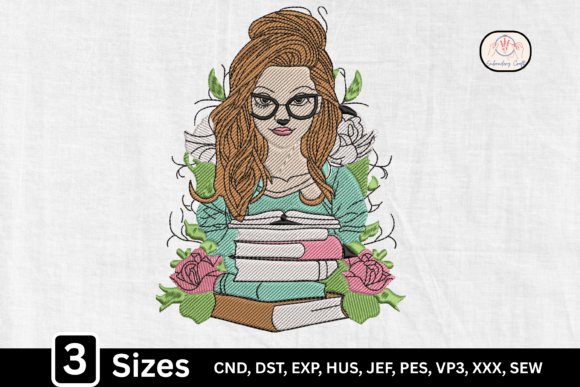
The product description highlights that this is a "fun and whimsical touch" designed to "spruce up your fabrics." From a design perspective, this immediately signals a friendly, approachable aesthetic. The concept of a "Book Stack" adorned with florals suggests a blend of intellectual charm and natural beauty. It feels handmade, organic, and slightly rustic, yet polished enough for retail.
For small business owners, particularly those in creative industries, this visual personality is valuable. It does not scream corporate stiffness; instead, it whispers creativity. This makes it an excellent candidate for businesses that want to project warmth and authenticity. Whether you run a boutique bookstore, a cozy café, a floral studio, or a handmade jewelry shop, the Floral Book Stack offers a decorative element that adds personality without overwhelming the viewer. It strikes a balance between being playful and elegant, which is a difficult needle to thread in embroidery design.
Real-World Business Applications
Let us move beyond the screen and discuss how this embroidery file performs in real-world production scenarios. In my experience, versatility is key. A design that only works on one item limits your revenue potential. Here is how the Floral Book Stack translates across various small business merch categories:
- Embroidered Patches: This design has strong potential as a standalone patch. The stacked nature of the books creates a contained shape that is easy to digitize with a clean edge. Imagine these applied to denim jackets, canvas tote bags, or even laptop sleeves sold by indie brands. They serve as high-value add-ons that customers love to collect.
- Staff Uniforms and Aprons: For a bakery, cafe, or florist, staff uniforms need to be professional but not boring. Placing a subtle version of the Floral Book Stack on the chest pocket of a work shirt or the bib of an apron adds a touch of pride and brand recognition. It tells the customer, "We care about details."
- Tote Bag Design: Canvas totes are a staple for Etsy sellers and crafters. This design fits perfectly in the center panel or as a repeated pattern along the side. Because it involves floral elements, it pairs beautifully with natural fabric textures, enhancing the handmade product feel.
- Cap Embroidery: If the design is compact enough, it can work as a cap front logo. However, curvature can distort intricate details. For caps, simpler versions or smaller placements (like the side or back) might yield better results.
- Product Packaging Accents: Beyond clothing, consider embroidering this onto cloth tags attached to your products. A soft, embroidered label featuring the book stack adds a premium unboxing experience that encourages social media sharing.
Strategic Brand Identity Impact
Every stitch contributes to your brand identity. Using the Floral Book Stack communicates specific values to your audience. It suggests that your business values knowledge, nature, and craftsmanship. For a school-related business, it reinforces educational themes. For a general retailer, it positions the brand as thoughtful and curated.
This design aids in customer trust and recognition. When consistent branding is applied across multiple touchpoints—such as matching apron embroidery with embroidered tote bags and branded patches—the business appears more established and reliable. Customers associate this visual consistency with quality. Furthermore, the whimsical nature of the design boosts buyer engagement; people are drawn to items that evoke emotion and story. A book stack surrounded by flowers invites questions, creating opportunities for conversation at markets or online interactions.
Where to Exercise Caution
While the design has charm, no single file is perfect for every application. As a designer, I must advise caution in the following areas:
- Small Patch Sizes: If you plan to scale this down significantly for tiny patches, pay close attention to the stitch density. Fine details may merge together, losing definition. Always test at 100% intended size.
- Curved Surfaces: Embroidering flat designs onto curved surfaces like caps or rounded bottle holders can cause puckering if the underlay stitches are too aggressive. Ensure your digitizer has accounted for curve compensation.
- Dark Uniforms and Contrast: The effectiveness of this design relies heavily on thread colors. On dark fabrics, light-colored threads are essential for visibility. Conversely, on light fabrics, darker outlines provide necessary structure. Poor contrast will make the design look muddy and unprofessional.
- Frequent Washing: For items like aprons and work shirts that undergo industrial laundering, high stitch density is good for durability but bad for fabric distortion. Ensure the stabilizer used matches the fabric weight to prevent warping after wash cycles.
Practical Designer Notes for Production
Before committing to a large production run, follow these steps to ensure your finished product meets professional standards:
- Test in Black and White: Print the design layout in grayscale first. This helps you evaluate the composition and spacing without the distraction of color. If the shapes don’t read clearly in monochrome, they won’t read clearly in color.
- Check Hoop Size and File Format: Verify that the hoop size of the digital embroidery file fits your equipment. Ensure the file format is compatible with your embroidery machine software.
- Review Thread Color Contrast: Select threads that offer sharp contrast against your chosen fabric. Consult with your thread supplier if you are unsure about colorfastness or availability.
- Inspect Spacing and Density: Look closely at the digitization. Are there any areas where stitches overlap unnecessarily? Is the spacing between the floral elements balanced? Uneven spacing can make the design look amateurish.
- Use Proper Stabilizer: The choice of stabilizer is often overlooked but critical. For woven cottons, cut-away stabilizer is usually best for durability. For knits, tear-away might suffice for lighter designs. Mismatched stabilizers lead to puckering and misalignment.
- Create a Printable Mockup: Before stitching, create a printable mockup of the design on the actual garment or accessory. This allows you to visualize the final result and get client approval without wasting materials.
- Confirm Commercial Licensing: Most importantly, ensure you have the correct rights to sell products made with this design. Check the license terms associated with the purchase. Unauthorized commercial use can lead to legal issues.
In conclusion, the Floral Book Stack is a versatile and charming addition to any design assets library. Its whimsical yet structured nature makes it suitable for a wide range of custom apparel and accessories. By carefully considering placement, fabric choice, and production techniques, small business owners can leverage this design to create memorable, high-quality merchandise that strengthens their brand presence. Remember, the difference between a good product and a great one often lies in the details—and in embroidery, those details are stitched one layer at a time.